
One sip of Sekt...
brought me so close to family roots...

I’m ~40% German (from my Dad). My great great Grandfather was born in 1842 in Staudernheim, Germany. He married my great great Grandmother in Duisburg, Germany (near Düsseldorf) and they moved (ironically because that’s where I went to college) to the Lehigh Valley, PA in 1868 (making me one generation too far to get German citizenship) where they continued the family.
So, how does this relate to wine you ask… Well, Staudernheim lies within the west German state of Rhineland-Palatinate, in the wine region of Nahe. So it seems that wine has always been a part of my heritage. Despite knowing that my family was from Germany, I always believed them to be from the south in Bavaria. So, I didn’t do my homework before our German adventure to know that on the drive from Mosel to Frankfurt am Main we could have driven directly through Staudernheim.
Instead, we drove about 27 miles east of Staudernheim to Uelversheim also in Rhineland-Palatinate, but in the wine region of the Rheinhessen. Rheinhessen is Germany’s largest wine region (and yes it’s along the Rhine) and produces almost a third of all Germany wines. Wine in the Rheinhessen dates back to Charlemagne and by the 9th century at least 88 villages in the region were growing grapes.
How did we come to pick the Weingut (winery) in Uelvershiem as our stop? Because that is where Moritz Kissinger is. A fourth generation winemaker, I first took a sip of a Moritz Kissinger Sekt (sparkling wine) about 2 years ago and was blown away. The Sekt was his first sparkling wine made of 100% Weißburgunder (Pinot Blanc) and I have been seeking out his wines ever since.
So, when our German adventure left a gap in the Mosel → Frankfurt itinerary, I knew just where we had to stop. The only issue… it was harvest. And no one has time for visitors. I reached out to Kissinger and was originally told no they were not doing tastings during that time but maybe reach out closer to. A mix of pushing and begging got us a tasting time.
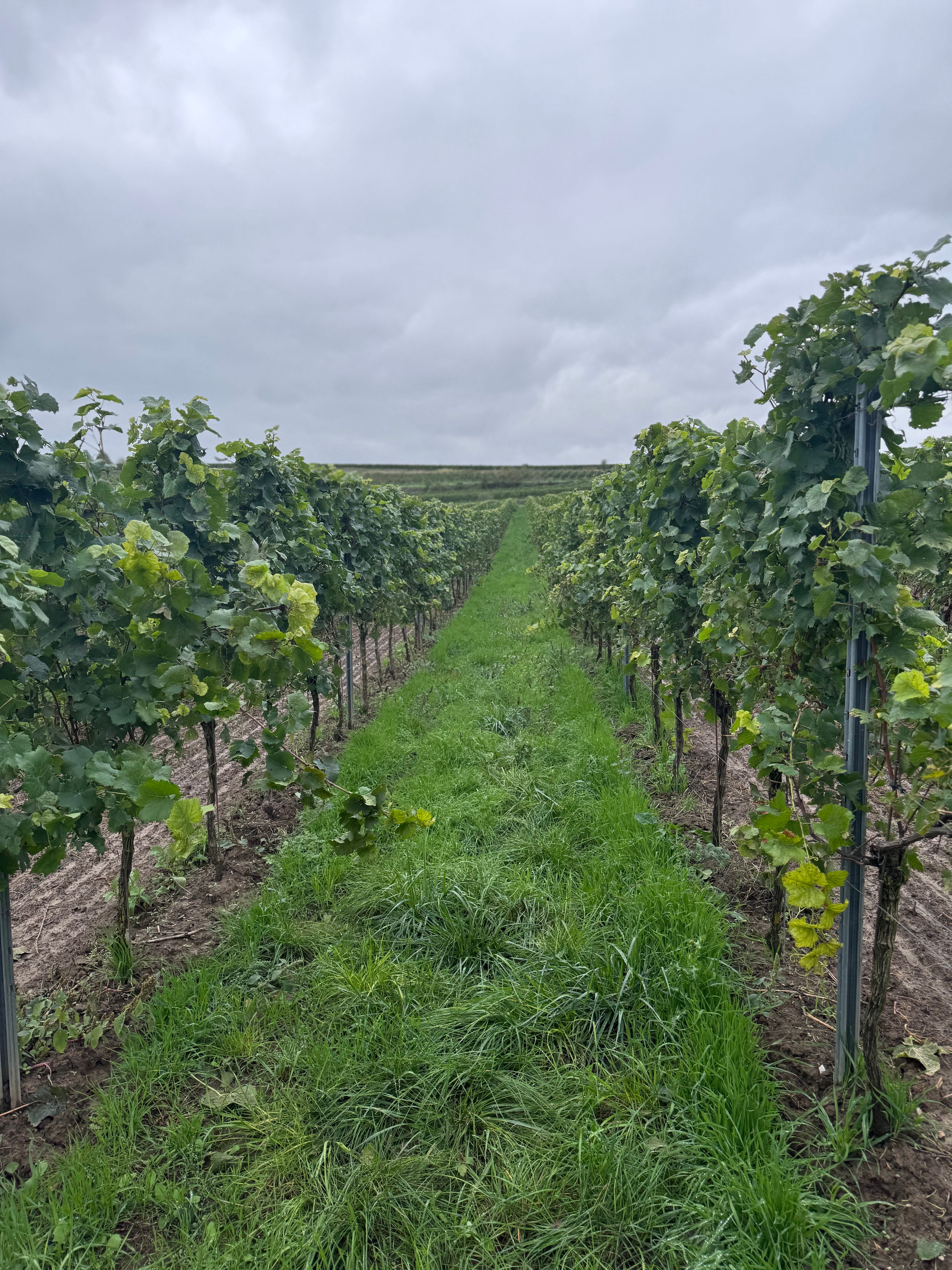
Where Mosel is steep and the vineyards are close to the river, Rheinhessen is flatter, more spread out with vineyards located all over the region.
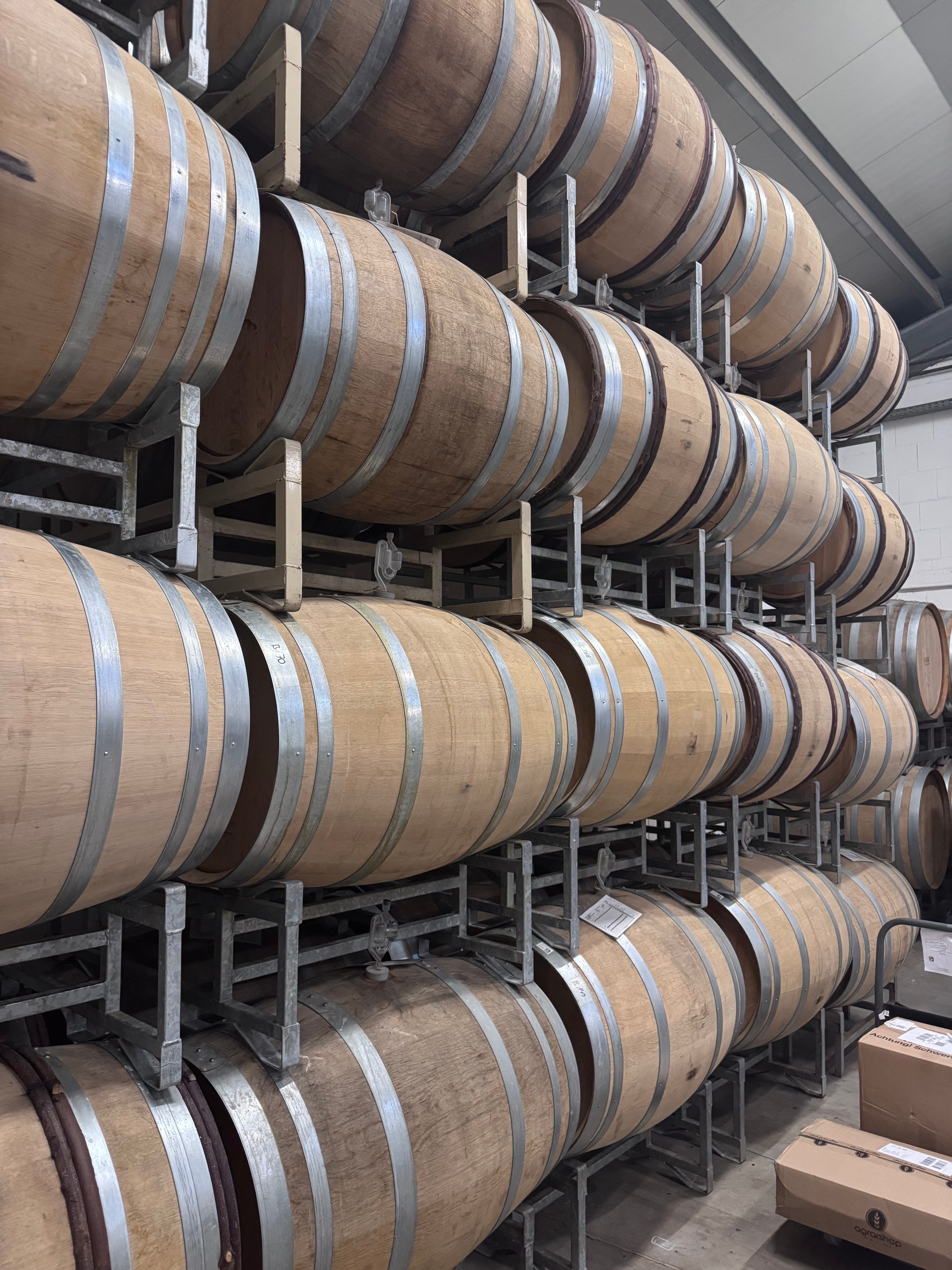
At Moritz Kissinger, we began in the winery where the newly harvested grapes were busy fermenting and aging. The (French) oak barrels are mostly neutral, as to not impart any oak flavors into the wine and let the character of the grapes shine. His reds use about 20% new oak and so the flavors are very subtle and balanced in the wine.
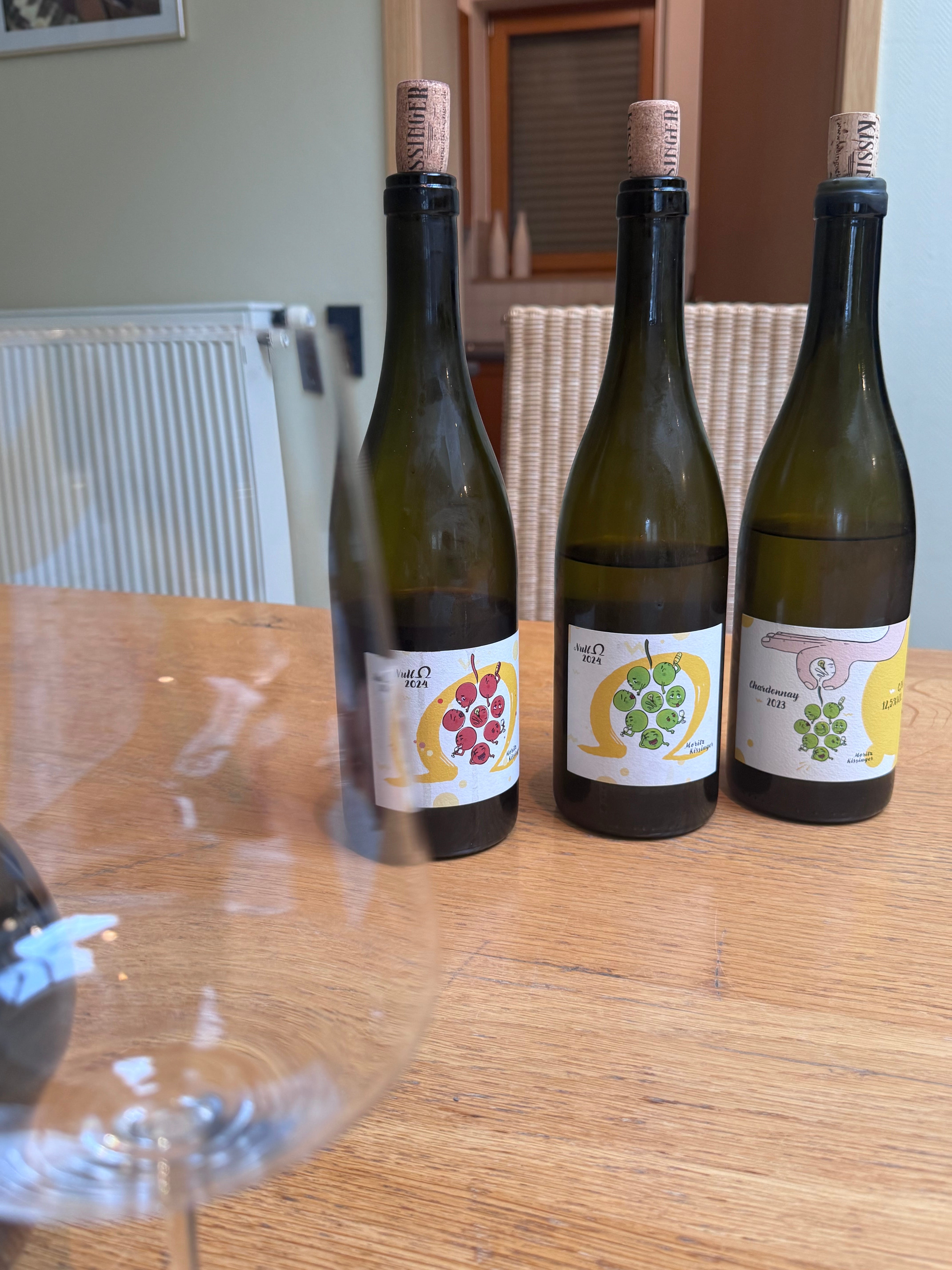
We were lucky enough to taste 3 wines:
Ohm Weiß (Weißburgunder & Chardonnay blend); 100% Chardonnay and Ohm Rot (Spätburgunder). But before we were able to taste Ohm Red, Moritz had to go to the vineyard and took us along with him.
Why the vineyard? Well harvest doesn’t mean all the work in the vineyard is done. The vines have to be prepared for winter which depending upon the region could mean planting cover crops between the vine rows, tying off or bending down branches - some growers even bury the canes in soil to protect them from frost.
While in the vineyard we found that Moritz doesn’t harvest all the fruit. He harvests first generation grapes, those that grow on main canes, anything growing on a secondary shoot he leaves on the vine. Lucky for us we got to taste them. The Weißburgunder grapes were small and had a pretty sizable pit but they were sweet and I may have sampled more than just a couple.
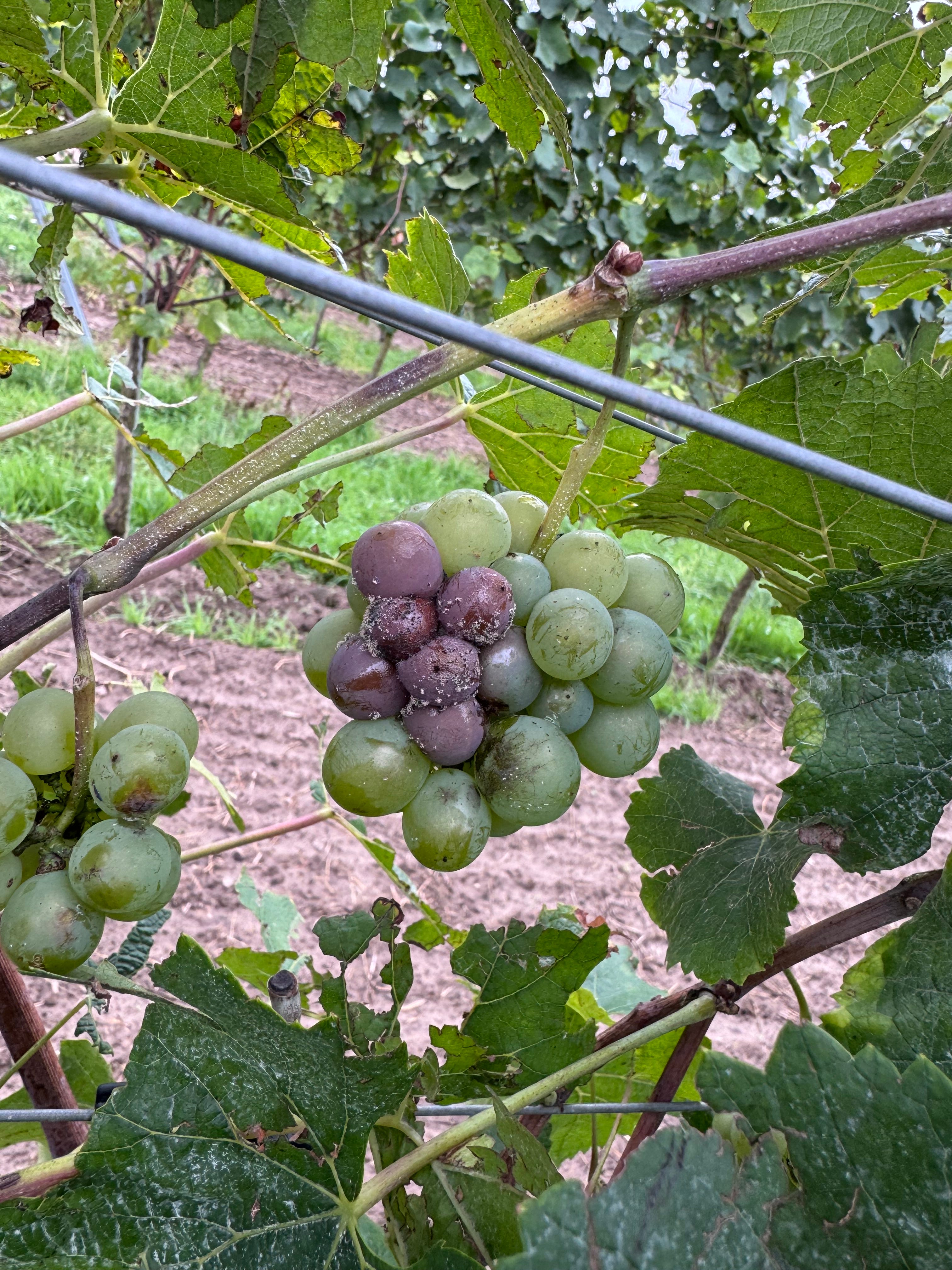
What was amazing to see what the formation of Noble Rot. This is something that I had only seen pictures of - so witnessing this up close was really cool. Without getting too scientific - Noble Rot is a good fungus that affects ripe grapes. The humid damp mornings encourage the fungus to grow. The afternoon sun comes out and the grapes dry out, preventing the fungus from developing into undesirable rot. Over time, the grape sugars are concentrated and the wines produced are sweet, rich, and caramelized with a distinct flavor. You might think it sounds gross, but they are delicious. (Kissinger doesn’t make a wine with Noble Rot…)
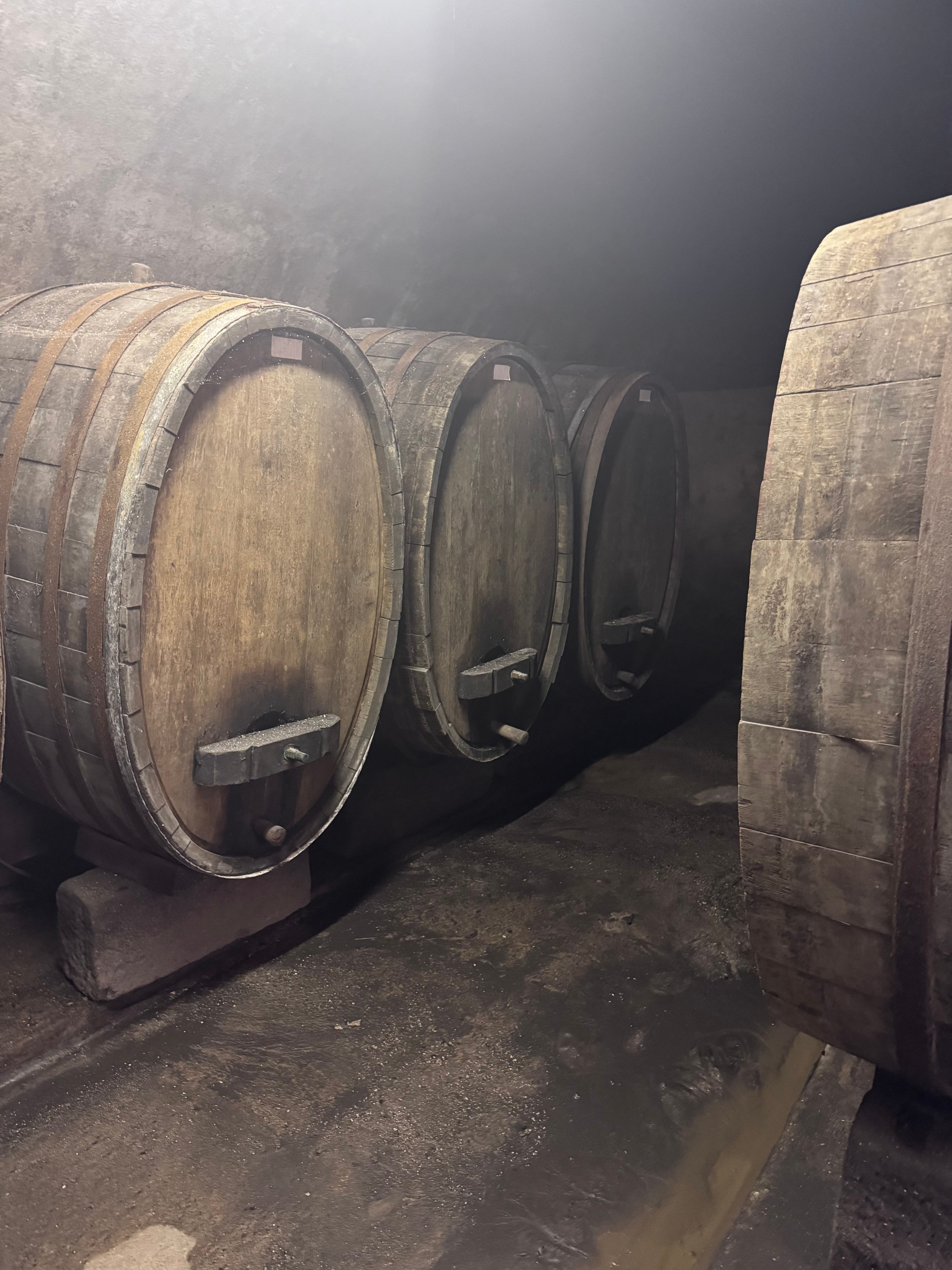
After Moritz was done in the vineyard we went back to the winery and tasted our last wine. We were just about ready to say goodbye when he told us that he purchased a building in nearby Nierstein, his hometown, and plans to do a major renovation with a kitchen, wine cellar, maybe coffee and a place for visitors to stay. Did we want to come see it? Well, yes. The highlight of the building was the cellar which once housed a small winery and left behind were oak wine barrels over 70 years old. Happy to add that we got invited to come back and stay when everything is completed!
Where to find some Kissinger wines:
2020 Blanc de Blanc Brut Sekt
Noble rot, I haven’t ever seen before, only read about it. Very interesting and informative as usual. Your writing is really amusing. Feels like I was with you.